
Since the Greek Word Apostasia can mean both a Spiritual Departure or a Physical Departure, we have to look at the context of Both letters to the Thessalonians Church.
You must understand this fact, the three rules of Bible Study interpretation are context, content and context! Context is King when determining meanings of words. This especially true since words have multiple meanings.
That said, this is what this blog post is going to cover.
Understanding Apostasy according to the Context Of 2 Thessalonians 2:1-9
“Let not any one deceive you in any manner, because it will not be unless the apostasy have first come, and the man of sin have been revealed, the son of perdition;”. (The Apostasy…. The Departure)
2 Thessalonians 2:3
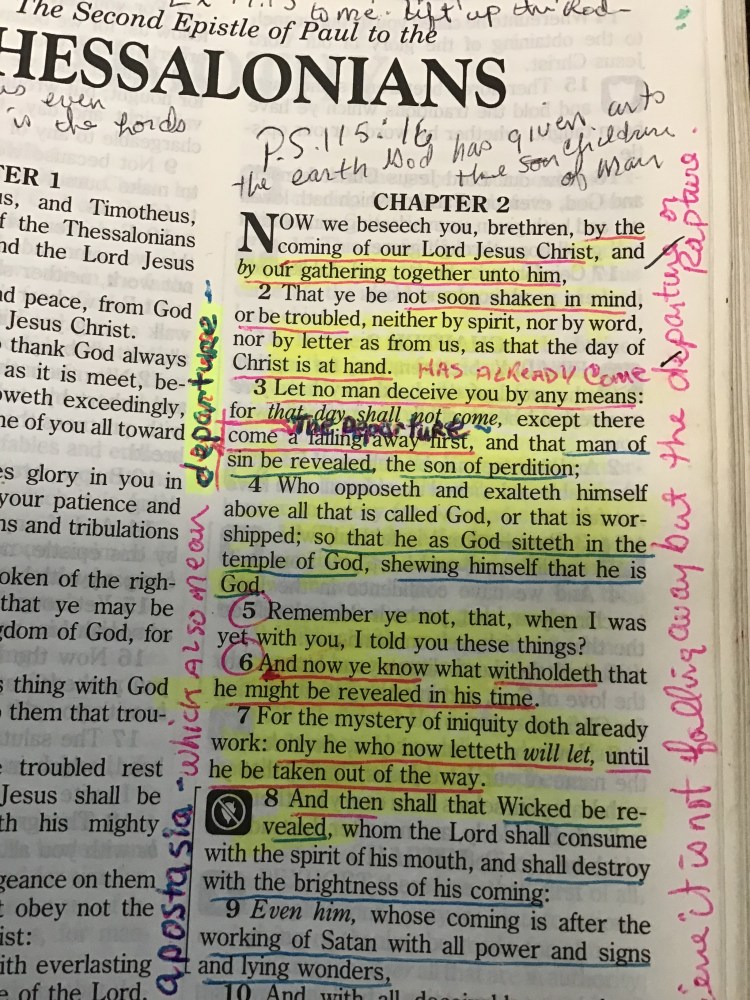
The Word Of God was NOT originally written in English. The Word was originally written in Aramaic/Hebrew and Greek and was translated into English more than one thousand years later. Latin preceded the English.
Read this carefully – ——ALL English Bibles are poor TRANSLATIONS of the Father’s intended message and that is compounded by the fact that they have many errors. A true scholar will look to the original languages for the truth. The term “falling away” of the Bible translation above is improperly derived from the Greek noun apostasia.
The first seven English Bible translations of apostasia all most appropriately rendered the noun as either the “the departure” or “the departing”. The second meaning of this word, apostasia, is departure.
This word here is as a noun and is only used 1 other time in the New Testament in Acts 21:21 and was that the Jews accusing Paul of teach to forsake (apostasia) Moses teaching! The verb form of this word is used 15 times and only 3 of them have anything to do with a falling away from faith. The other 12 are depart , departure or departing.
The rule is when translating a word with more than 1 meaning , you use the context of passage.
These are the 7 earlier Bibles that used the second mean as The Departure for Apostasia… and as you will see from the context of this passage would be the proper translation and point to a Pre-trib catching away of the Bride , the Church.
Wycliffe Bible (1384)
Tyndale Bible (1526)
Coverdale Bible (1539)
Cranmore Bible (1539)
Breeches Bible (1576)
Beza Bible (1583)
Geneva Bible (1608)
In fact, Jerome, going back to the fourth century, translated the New Testament from Greek into Latin in what is called the Latin Vulgate. It is called the Vulgate because Vulgate means common. Latin was the common language of the day. Jerome wanted the Bible readable in the common language of the day, which in the fourth century was Latin. From the word Vulgate, we get the word “vulgar,” as in common, earthy speech. When Jerome translated Second Thessalonians 2: 3a he used the Latin word discessio, which means departure.
Unfortunately, as time goes by, we see our English translations progressively faltering in greater and greater ways.
Sometime after these early Bibles, The King James Bible of 1611 was the first to actually change the above correct translations from “departure” to “falling away”. To this day, no good reason has ever been given.
The context of 2 Thessalonians 2 is as follows:
These verses are about the coming of the Lord and our gathering together unto Him (verse 1)
The church was distressed because they were told they were in the tribulations (the Day Of The Lord) (verse 2) They were told that Day had already come!
He assure them , that day can not come until the apostasia (the departure) comes first (catching away of the Church) and the Man Of Sin revealed (the anti-Christ) (verse 3)
Notice this verse uses the definite article (the) making it a definite and known event that they had knowledge of!
Moreover, the definite article in front of the noun apostasia lends support to the physical departure view by conveying its instantaneous rather than gradual nature.
In addition, because both the noun and the verb emanating from the same root can be used very clearly to refer to physical departures, the extended context and the immediate context must be consulted to define the meaning of apostasia in Second Thessalonians
And the anti-Christ would have a restrainer until the restrainer (The Church) is taken out of the way… Paul even makes a direct reference The the departure of the Church and now tells them and us that, now you know what is withholding him that he be revealed in his time until it is taken out of the way. (Verse 6
Paul even tells Them, “I told you things when I was with you” , what did he tell them .. The dead in Christ will rise first and we which are alive and remaining will be caught up together in it twinkling of a Eye to meet the Lord in the air , and so shall we ever be with the Lord! In fact both letters to the Thessalonians in context is , The Coming Of The Lord and Our Gathering Together with Him!
So based on the context… falling away is interpretation and not a translation… this is a direct reference to the Catching away of the Church before the Anti-Christ can be revealed!
I at least hope this lead you to more study of this verses!
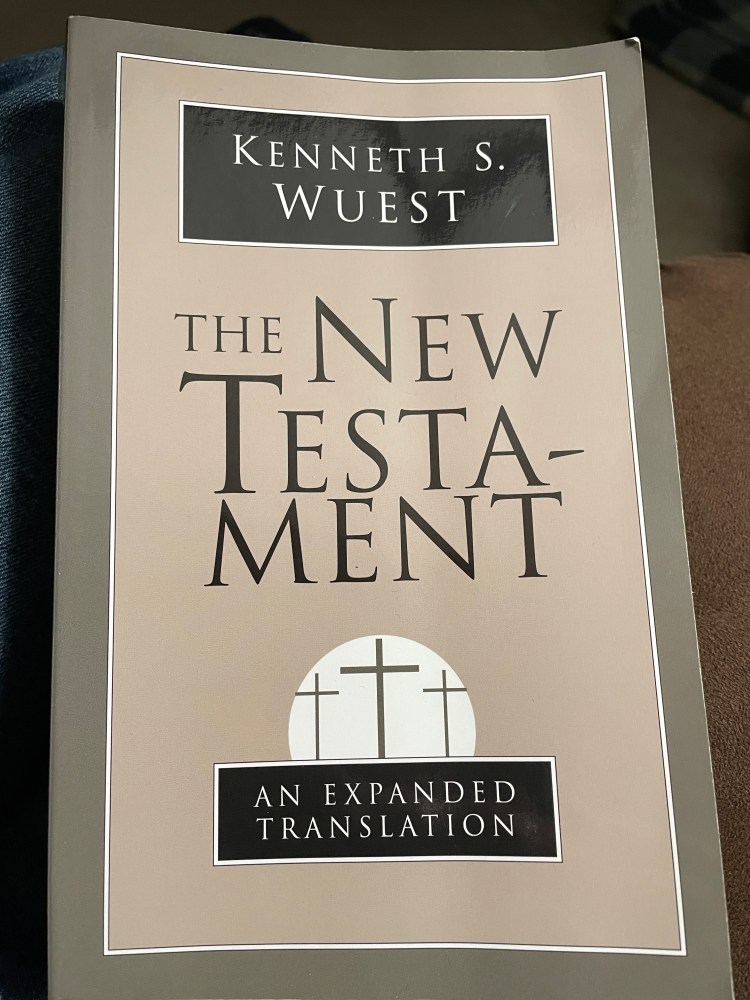
Here is one of the those such translations that is taken from the Greek text and context of the Greek. Kenneth S. Wuest is a will renounce Greek Scholar. Also below is  the text from 2 Thessalonians from this translation that bears out the Greek of these early translations.
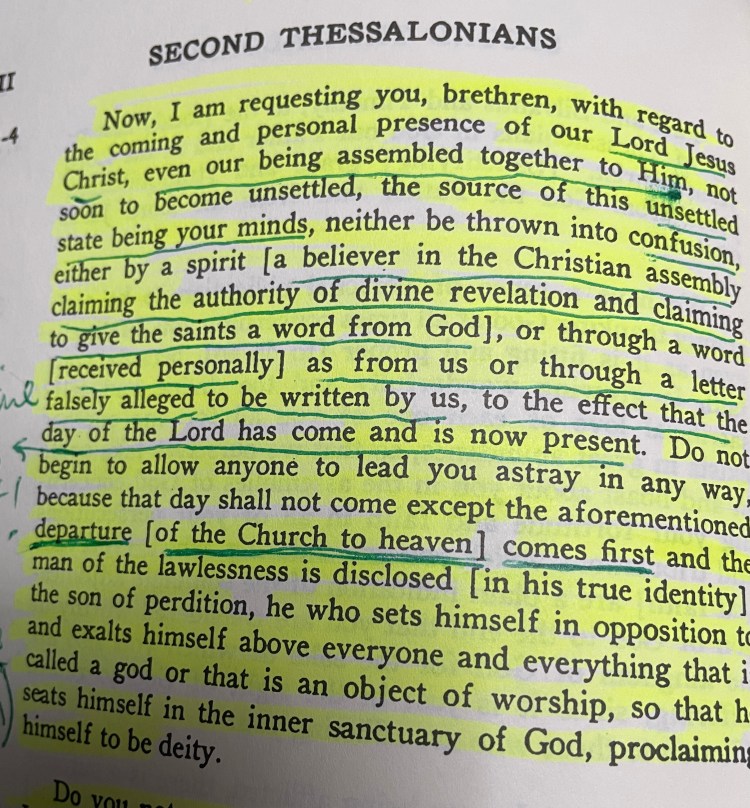
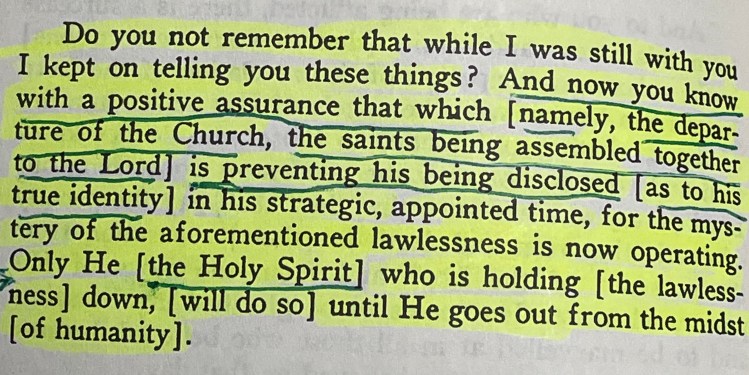
Have a Great Day! Robert Bowles
 The Illuminated Path